Pye communications receivers. Thanks to Niall for the photographs of the Philips version...
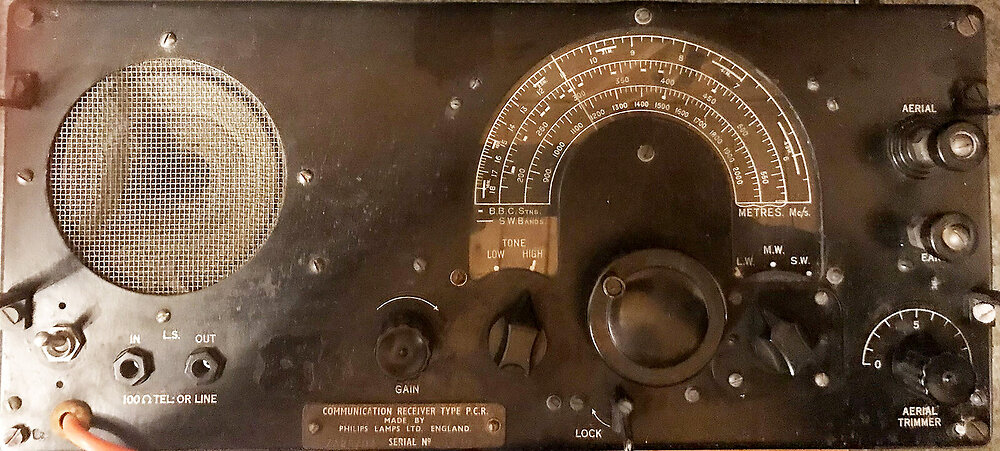
- Philips-made PCR, front panel
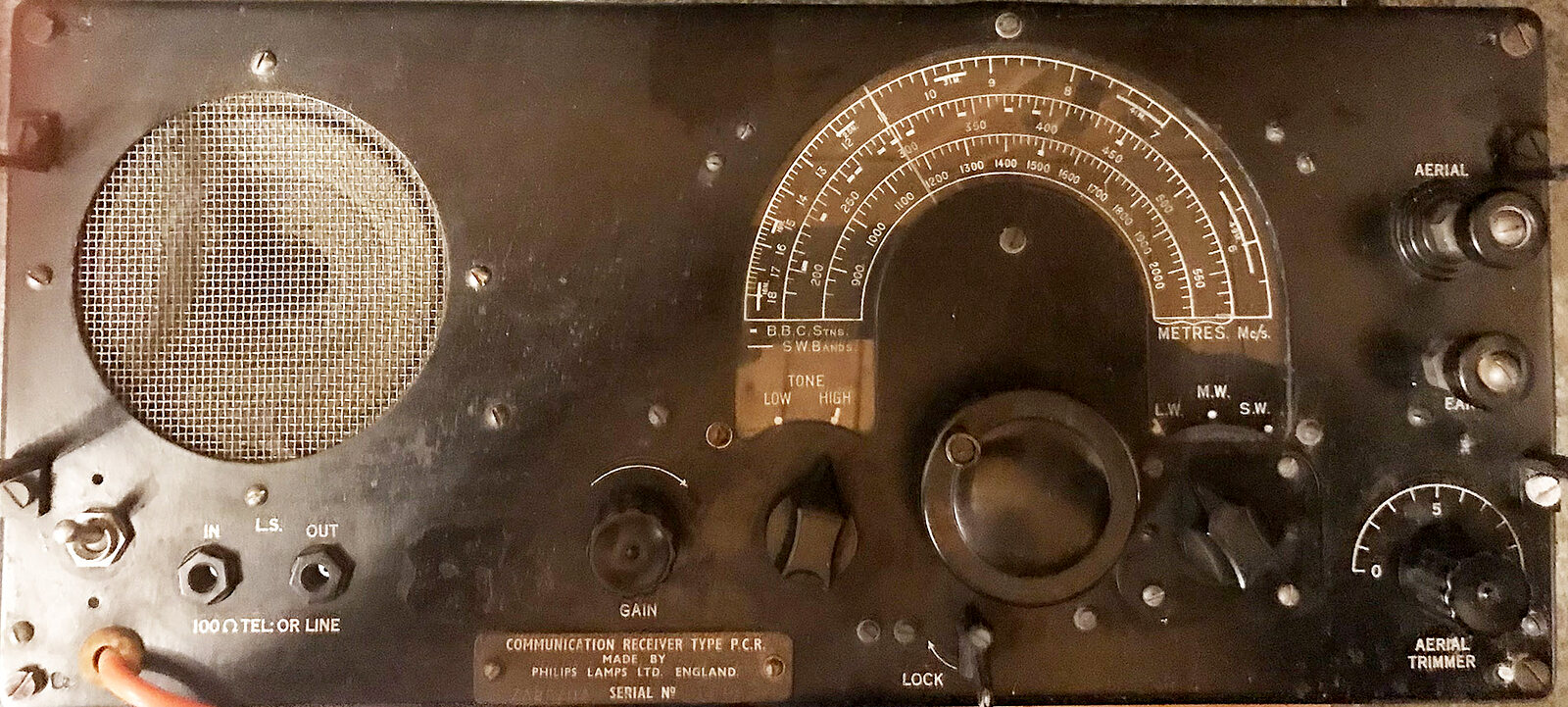
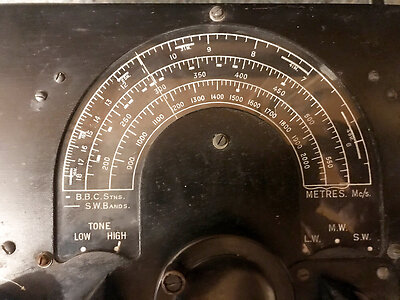
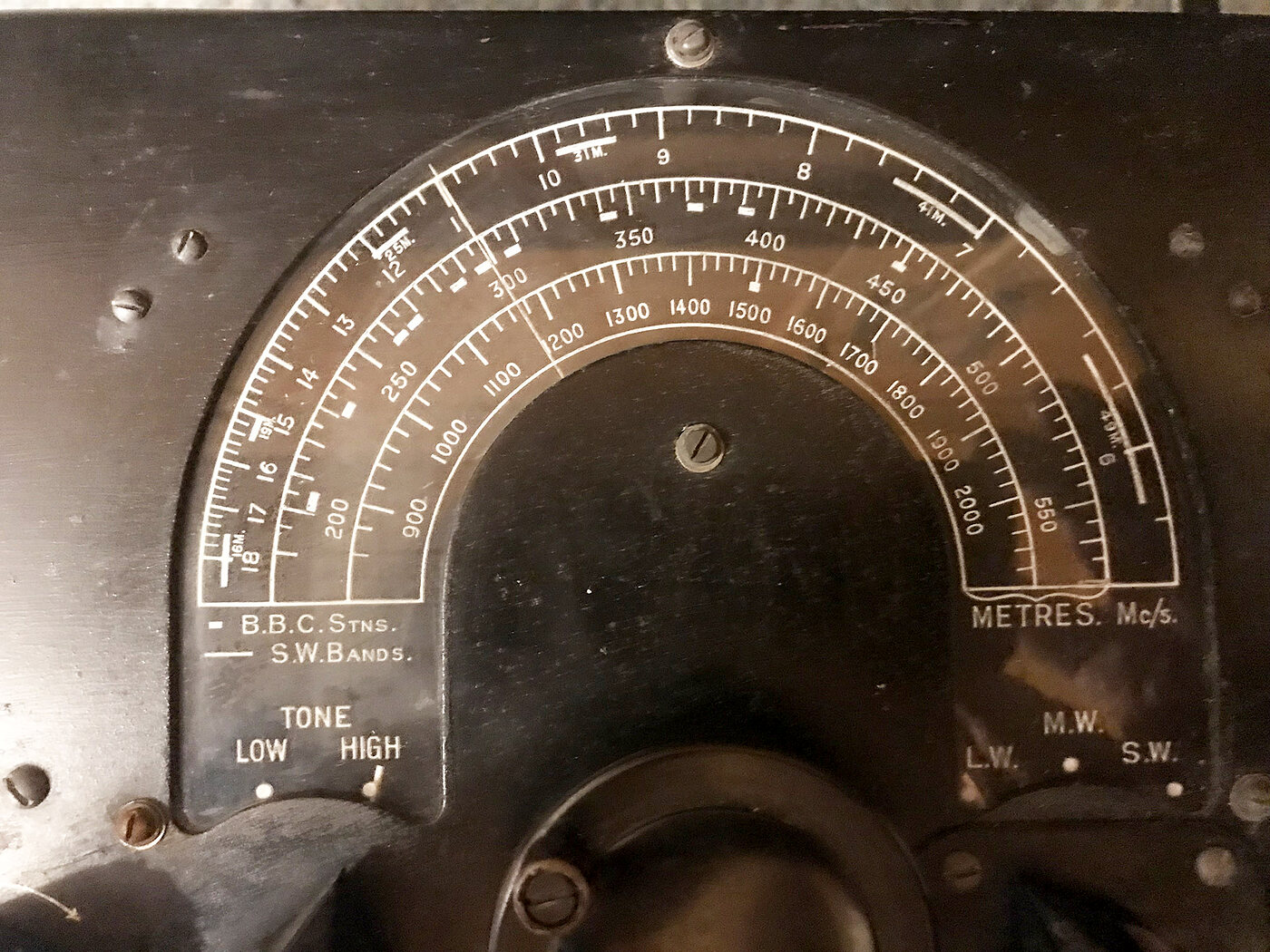
- Tuning dial
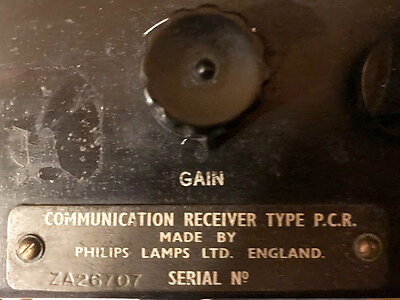
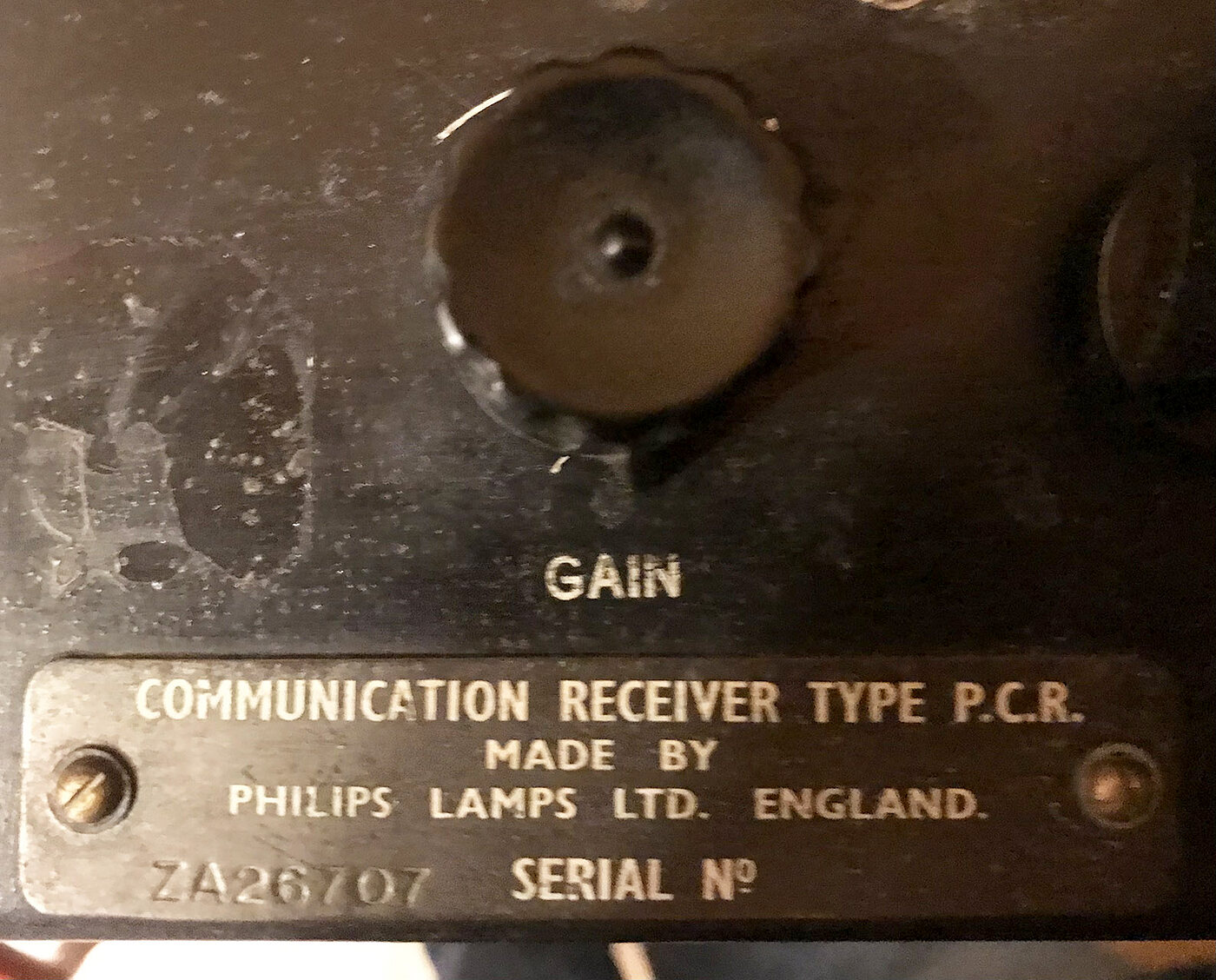
- Nameplate
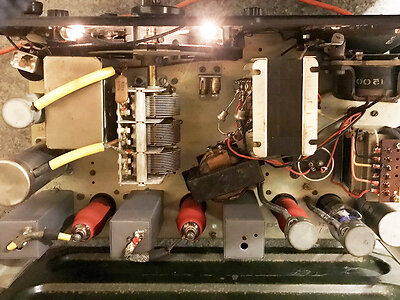
- Chassis
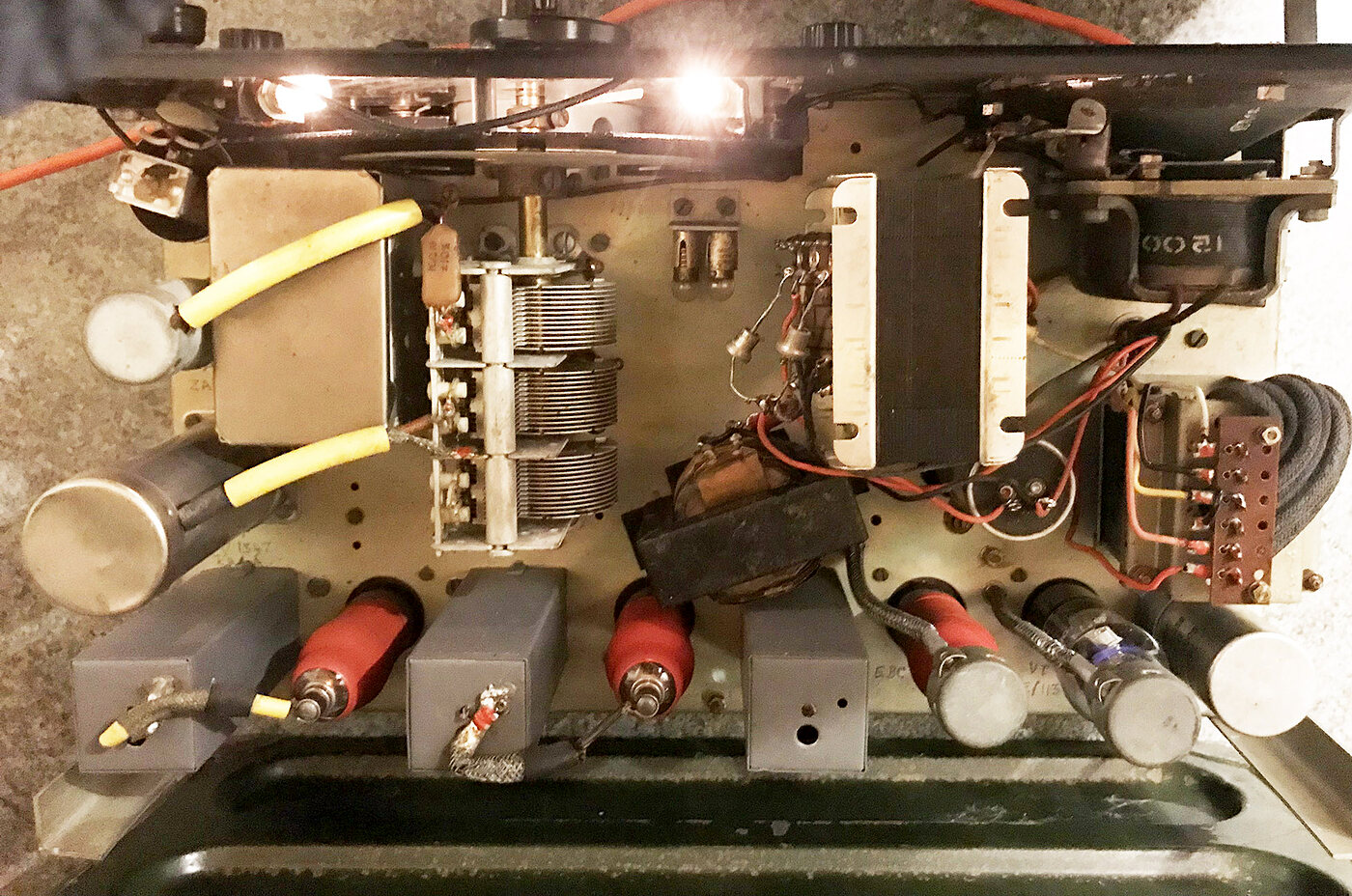
The Pye PCR series is an interesting family of British military valve receivers developed during the Second World War. Designed by Pye Ltd of Cambridge in 1944, these robust receivers were used by the British Army during the invasion of Europe and remained in military service for many years afterwards. PCR stands for Portable Communications Receiver.
Although frequently described as military entertainment receivers, their original purpose was considerably more important. They were intended to receive information broadcasts and military reports as Allied forces advanced through occupied Europe following the D-Day landings in June 1944.
The PCR was developed from the receiver circuitry of the famous Wireless Set No. 19 used in armoured vehicles. Pye engineers adapted this circuitry into a standalone six-valve superheterodyne receiver, with improved RF input selectivity, narrower intermediate-frequency selectivity and a more powerful audio output stage.
Two engineers associated with its development were William (Bill) Pannell and Donald H. Hughes, the latter also involved in the Wireless Sets No. 18 and No. 19.
The receivers were used for several purposes:
- Reception of military information broadcasts during the Allied advance through Europe.
- Supplying receiving equipment to resistance groups in occupied France, the Netherlands and Norway.
- General military reception duties.
- Later use as NAAFI and forces entertainment receivers.
- Continued military service during the Korean War and subsequently.
Pye was contracted to manufacture approximately 17,000 receivers, with production also undertaken by Philips Lamps and Invicta Radio.
There were several versions, all sharing much of the same circuitry and distinctive military appearance.
Model
Frequency coverage
Loudspeaker
The original PCR is particularly distinctive because of its built-in loudspeaker. The PCR2 provides extended upper short-wave coverage, whilst the PCR3 dispenses with long wave and introduces two short-wave ranges. This makes the PCR3 especially attractive for general HF listening and experimentation.
Valve
Function
The earlier original PCR can use an EL32 output valve instead of the 6V6G.
The PCR receiver by Pye is a broadcast receiver covering long, medium and short wave bands. It was later manufactured by Philips Lamps Ltd.