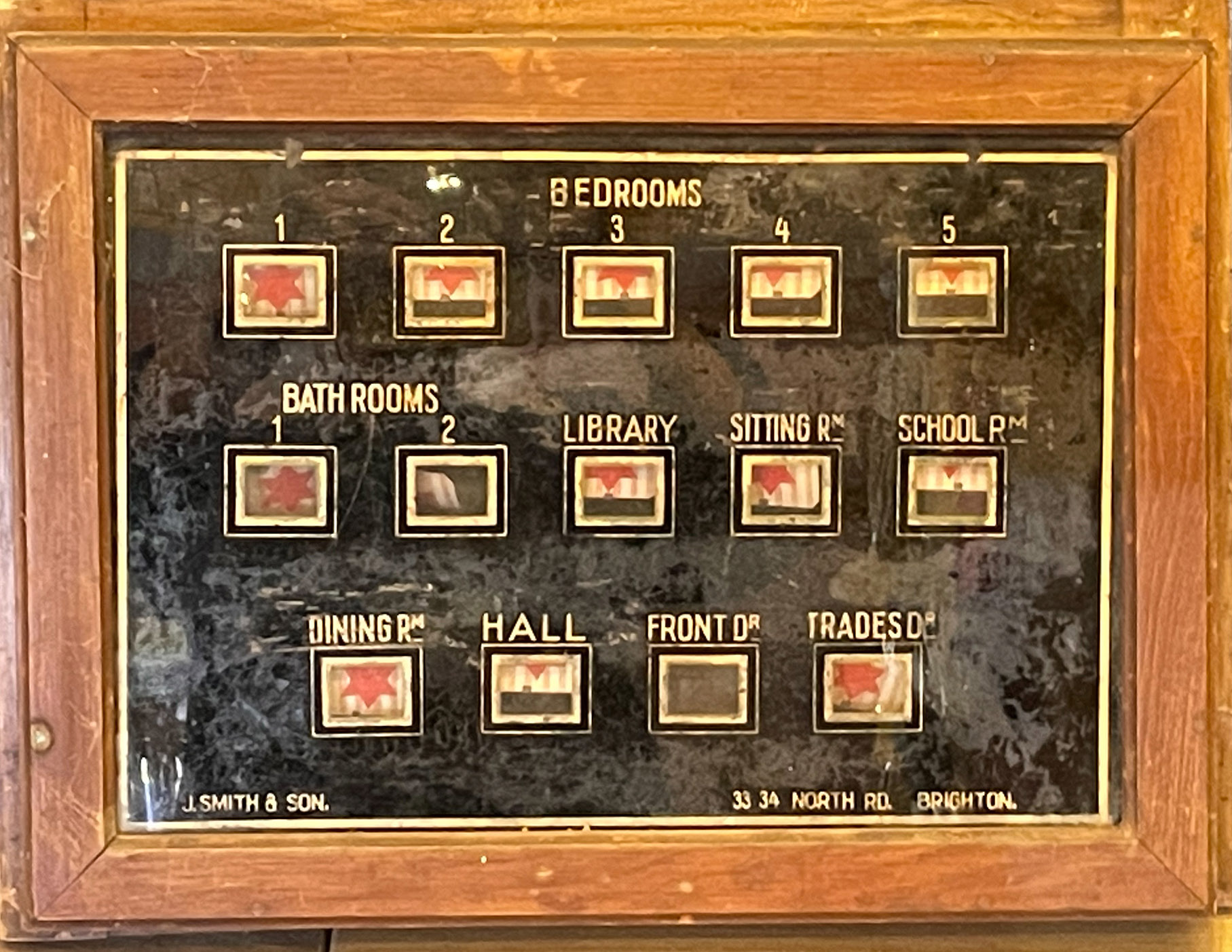
The servant’s or butler’s bell box below has fourteen flags. Sadly, it’s not in excellent condition but it is serviceable. I love the idea of the library, the school room, dining room and tradesman’s door. I can imagine a servant or the butler looking up at the board before rushing off to attend the mistress or master of the house. This box would have been installed in a large house.
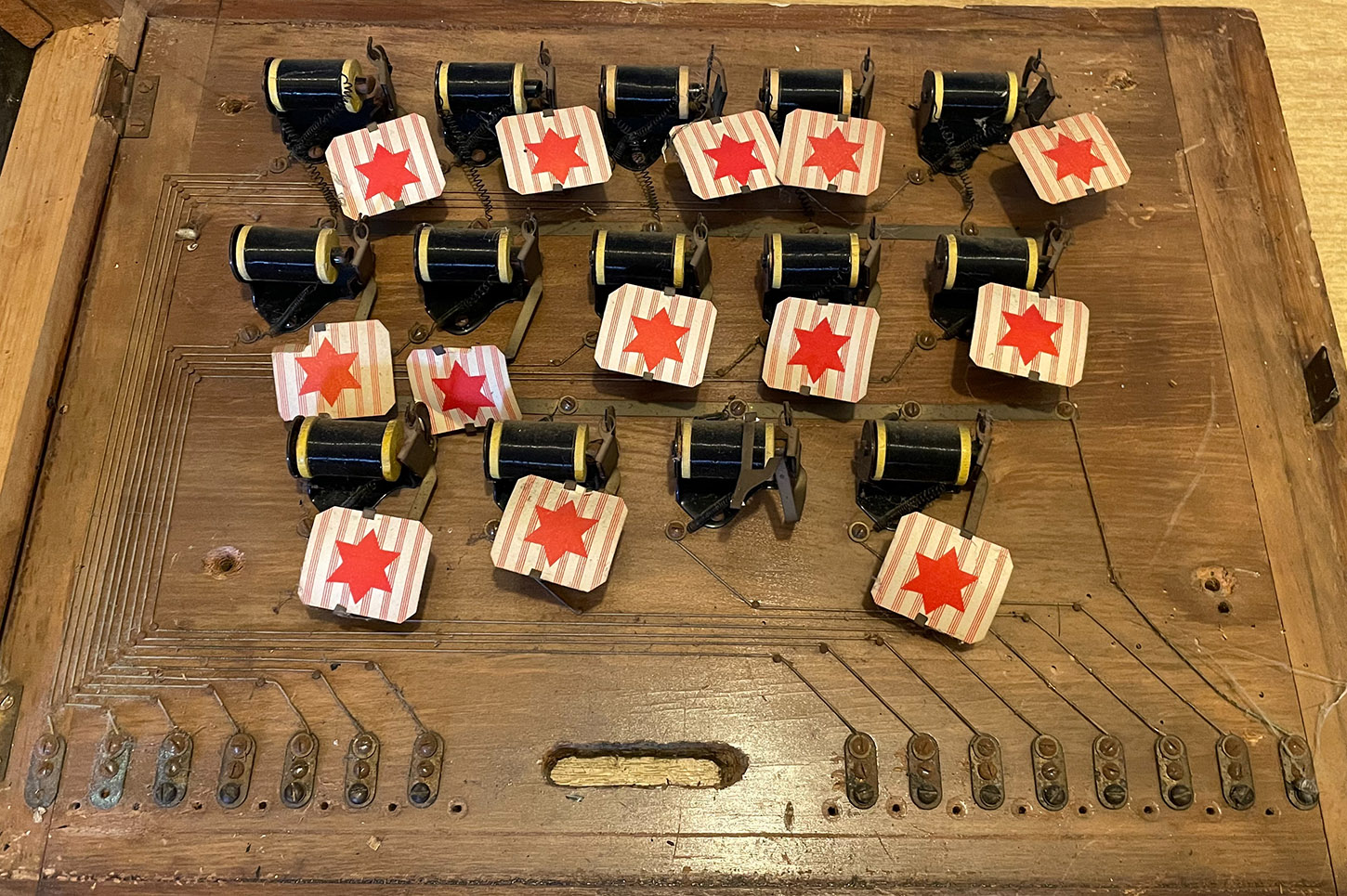
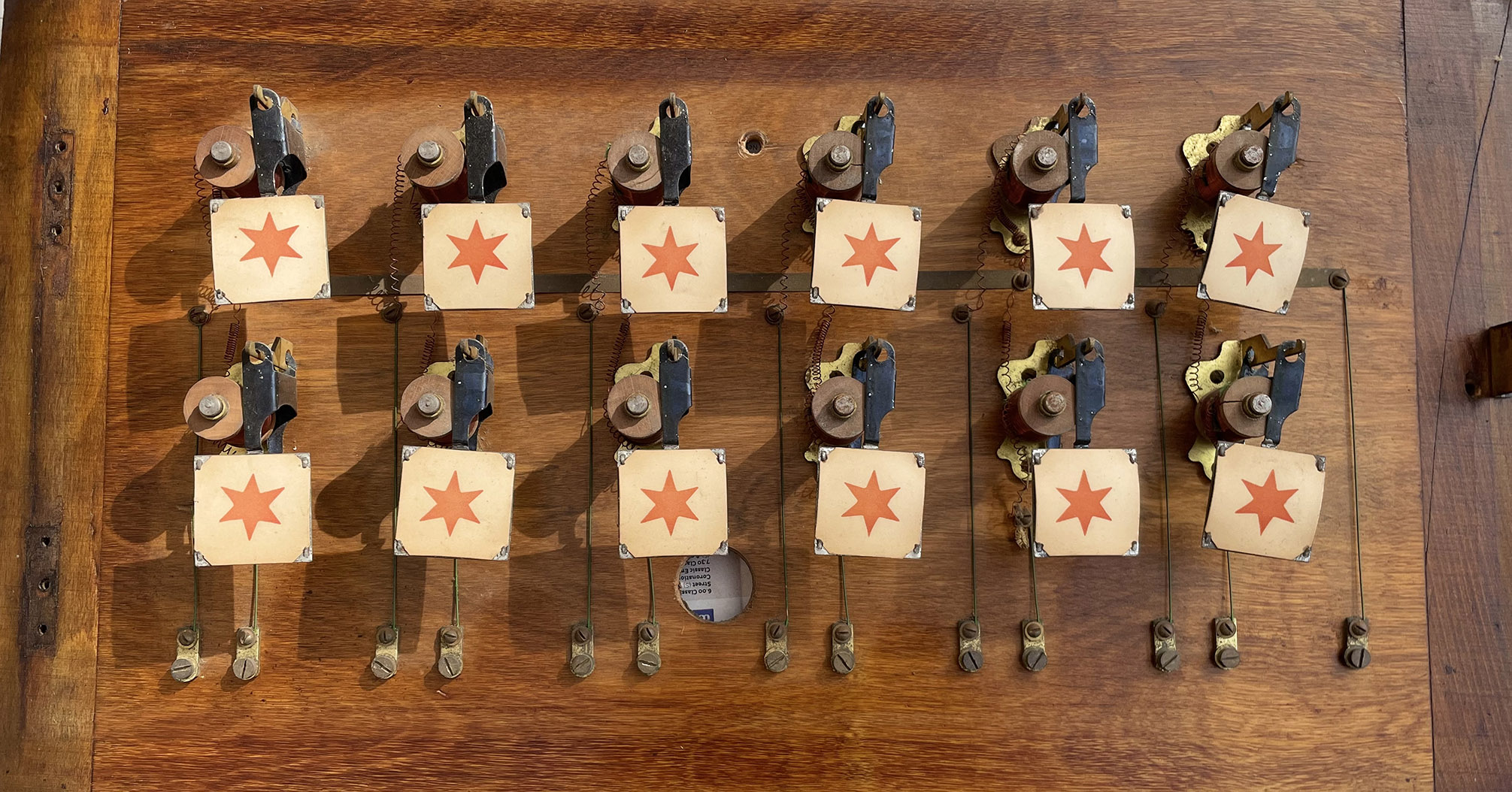
The bell box below only has twelve flags but it’s in excellent condition so this is the one I’ll be installing in the house.
I’d like to have a push button in every room of the house but concealing the wiring wouldn’t be easy. I don’t really want wires showing everywhere, they would be best hidden beneath the floorboards. The trouble is, we have fitted carpets... which I won’t be taking up!
A servant’s or butler’s bell box flag board was the household’s call indicator. Buttons in rooms around a large house were wired to a central board, usually placed where a butler or servant could see it. When someone pressed a button, the corresponding little flag or indicator moved to show which room needed attention. The servant would reset it after answering the call. Some systems also sounded a bell.
Boards came in different sizes and designs. For example, a Gents of Leicester board from around the 1920s is described with six flags; larger houses might have many more, with labels for bedrooms, bathrooms, the dining room, kitchen or tradesman’s entrance.
“GPO” in a catalogue or collection listing may refer to where a particular example was kept or found. These boards were household signalling equipment, rather than ordinary public telephone instruments. Some used electromagnetic mechanisms; the exact wiring and reset method depend on the board.