The Wireless in British Family Life During the 1940s
During the 1940s, the wireless was much more than a piece of electrical equipment sitting in the corner of the living room. For millions of British families, it was a friend, a source of comfort, a connection with the outside world and, during the darkest days of the Second World War, an essential link to what was happening beyond their own front door.
Long before television became commonplace, the wireless occupied a special place in the British home. It brought families together, provided entertainment and delivered news that could change people's lives.
The family gathered around the wireless
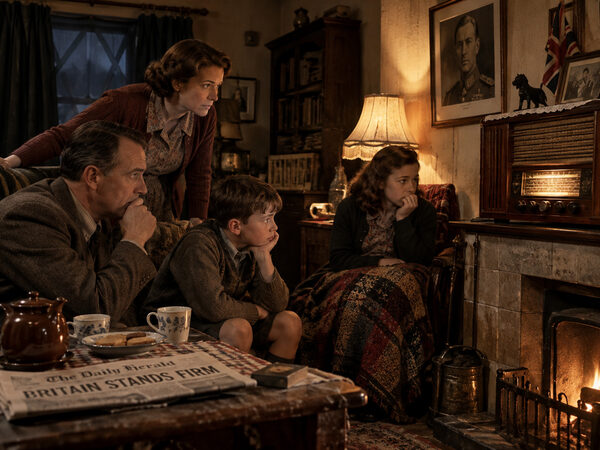 Picture a typical British living room in the early 1940s. A coal fire burns in the grate, father sits in his favourite armchair, mother is knitting or sewing, and the children are sitting on the carpet or gathered around the table.
In the corner stands a polished wooden wireless set, perhaps a Bush, Murphy, Ekco, Pye or Marconi. Its illuminated tuning dial casts a gentle glow across the room as familiar voices emerge from the loudspeaker. The wireless might have been one of the most expensive possessions in the household, and it was often treated with considerable care.
Unlike today, when almost everyone has their own entertainment device, families frequently listened together. There was generally one wireless in the house, and whatever programme was selected became entertainment for everyone. Children learnt to sit quietly during the news, while their parents looked forward to favourite comedy programmes, plays and musical performances. Listening to the wireless was often a family occasion rather than something people did alone.
The wireless during the war
When Britain entered the Second World War in September 1939, the importance of the wireless increased enormously. Families depended upon BBC broadcasts to learn about events in Europe, the progress of the fighting, air raids and government announcements.
Imagine sitting beside the wireless in 1940, listening to the voice of Winston Churchill as he spoke about Britain's determination to resist Nazi Germany. For families with sons, husbands or brothers serving in the armed forces, news bulletins were particularly important. They listened anxiously for reports from France, North Africa and, later, the Normandy landings.
There must have been many occasions when the wireless was turned up and everyone in the room fell silent. During the Blitz, the familiar sound of the BBC could offer reassurance. Even when homes had been damaged, families separated and everyday life disrupted, radio helped preserve a sense of normality.
And when victory finally came in Europe on 8 May 1945, millions heard the historic announcements on their wireless sets, including broadcasts by Churchill and King George VI.
Laughter and entertainment in difficult times
Of course, the wireless was not all about the war. People desperately needed something to take their minds off rationing, bombing and uncertainty. The BBC provided an enormous variety of entertainment, and some programmes became household favourites.
Perhaps one of the best remembered was ITMA (It's That Man Again), starring Tommy Handley. Its humorous characters and familiar catchphrases brought laughter into homes throughout Britain.
Other favourites included:
- Workers' Playtime: comedy and variety entertainment, particularly for factory workers.
- Music While You Work: lively music intended to keep spirits high and maintain morale in factories.
- Sincerely Yours: featuring Vera Lynn, whose songs meant so much to servicemen and their families.
- Children's Hour: stories, plays and entertainment for younger listeners.
- The Brains Trust: an entertaining discussion programme in which a panel answered listeners' questions.
Some of these programmes became part of people's daily routines. Housewives would arrange their domestic tasks around a favourite broadcast, while children hurried home from school to hear a much-loved story.
The Forces Programme, introduced in January 1940, also became extremely popular with civilian audiences.
The wireless brought neighbours together
Not every British household could afford a good wireless set, particularly during the earlier years of radio broadcasting. Although radio ownership had become widespread by the 1940s, there were still homes without a set.
Neighbours and relatives might gather in a house where there was a wireless to listen to an important speech, a special entertainment programme or news of a major event. During wartime, radios were also heard in factories, service canteens and other communal places.
The wireless helped create a shared national experience. People from different backgrounds and parts of the country could listen to the same voice, the same news and the same music at almost exactly the same moment.
After the war - a new era of listening
After the war ended in 1945, the wireless continued to occupy an important place in British family life. People were eager for cheerful entertainment, light music, comedy and drama after years of hardship.
The BBC Light Programme began in July 1945, offering popular entertainment, while the Home Service continued providing news, talks and other programmes. By the second half of the decade, new favourites were appearing.
Housewives' Choice began in 1946, providing popular music for listeners at home. Woman's Hour also began in 1946, while Dick Barton - Special Agent became an enormously popular adventure serial. Many listeners followed Dick Barton's adventures eagerly, making sure they were beside their wireless when the next episode began.
Radio manufacturers gradually returned to producing sets for the domestic market. The familiar wooden-cabinet valve receiver remained a central feature of countless British living rooms.
More than just a radio
Perhaps what made the wireless so special in the 1940s was the way it encouraged people to use their imagination. There were no pictures to watch. A radio play relied entirely upon voices, music and sound effects. Listeners had to imagine the characters, the places and the events taking place. A good radio drama could transport a family from their modest sitting room into a world of adventure, mystery or romance.
The wireless also provided company. For someone living alone, a familiar voice coming from the loudspeaker could make an otherwise quiet house feel a little less lonely. For children growing up during the 1940s, those warm sounds from the family wireless would often remain treasured memories throughout their lives.
A lasting memory of the 1940s
Today, when entertainment is available instantly on televisions, computers and mobile phones, it is difficult to appreciate quite how important the wireless once was. In the 1940s, the radio was not simply switched on and ignored. People often made a point of listening. They knew when their favourite programme was due to begin and arranged their evenings accordingly.
The wireless brought news of war and peace, laughter during hardship, music into ordinary homes and a sense of companionship to millions. And perhaps most importantly, it brought families together. The gentle glow of a tuning dial, the warm sound of a valve receiver and the familiar announcement, "This is the BBC Home Service", became part of everyday British life. For an entire generation, these were the sounds of home.