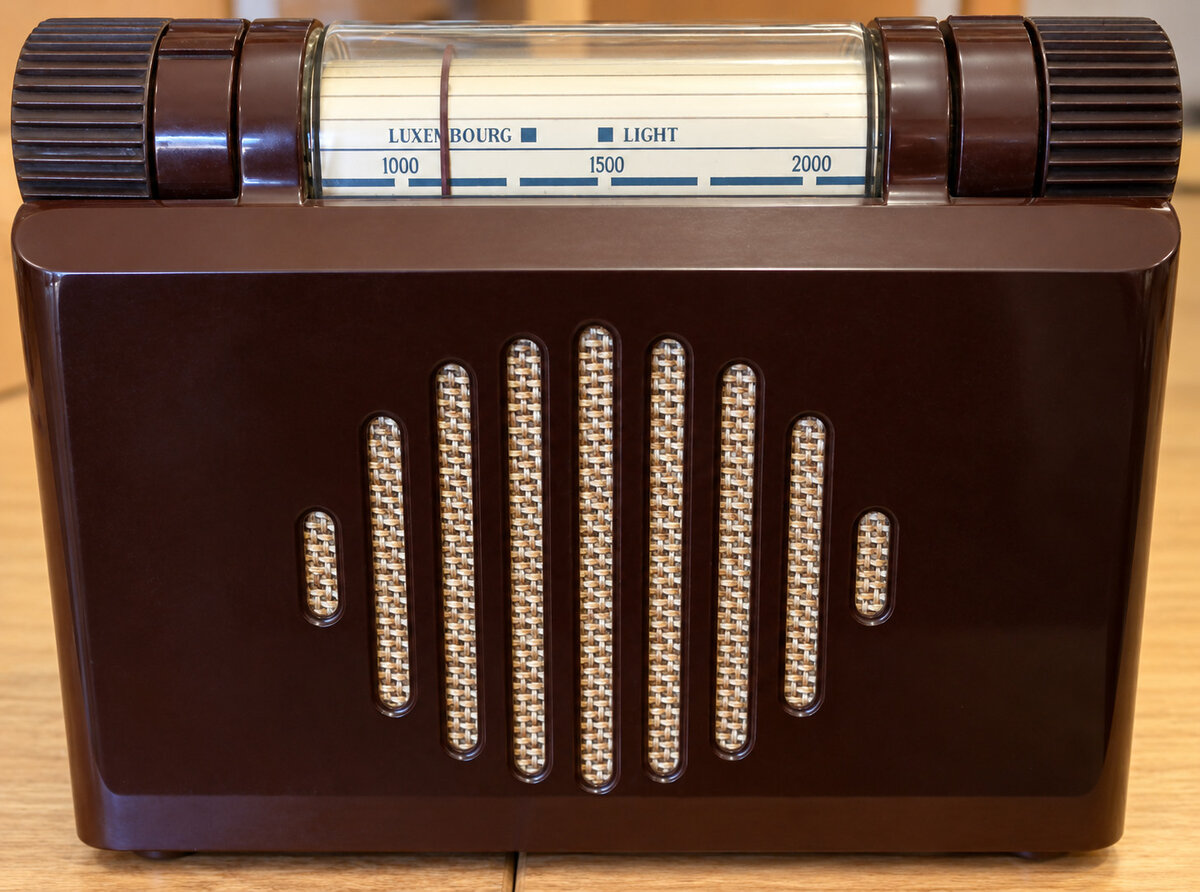
The Murphy A100 is one of Britain's most distinctive early post-war valve radios. It was introduced in January 1947 and designed to be a compact, stylish second radio for the home, at a time when most wireless sets were considerably larger. The A100 is particularly interesting because of its unusual Bakelite cabinet, miniature valves and innovative arrangement of controls.
The design was quite unlike the traditional wooden wireless sets of the period. It featured a deep maroon Bakelite cabinet, shaped rather like a small handbag, with a circular arrangement of vertical speaker grille slots.
The tuning scale is mounted horizontally across the top in a cylindrical housing, with large ribbed controls at either end. Smaller controls operate the power and waveband selection. The use of miniature valves helped Murphy produce a small receiver that could be moved from room to room, although it still required a mains connection.
SERVICE MANUAL PREVIEW
The original Murphy service instructions for the A100, with the supplement for the A100F, are available to members. Here's a taste of what's inside.
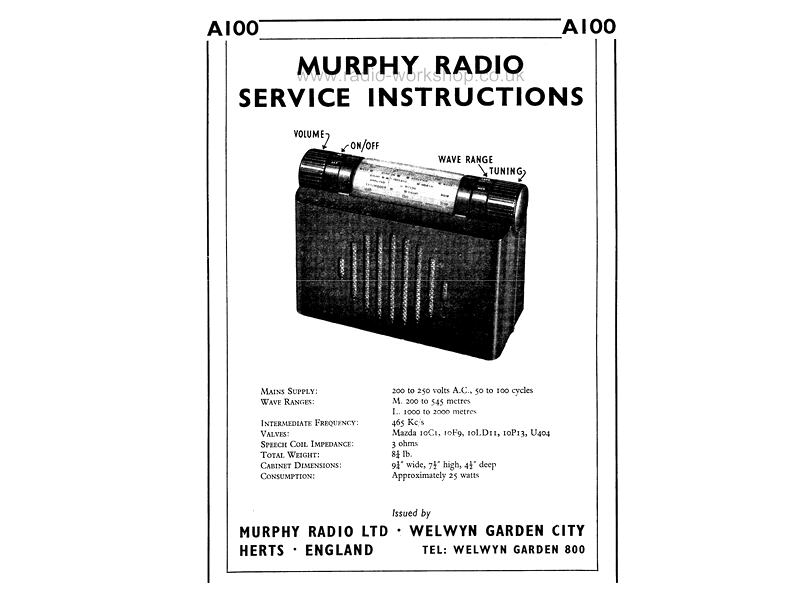
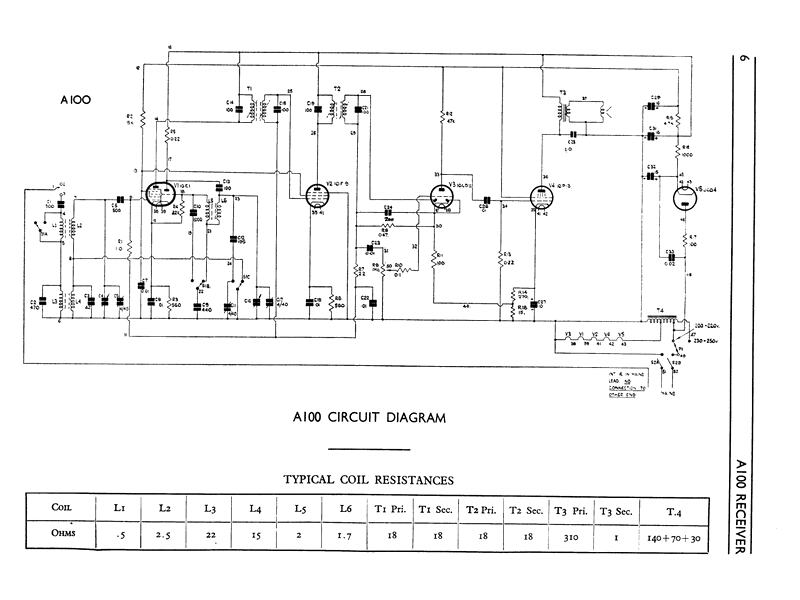
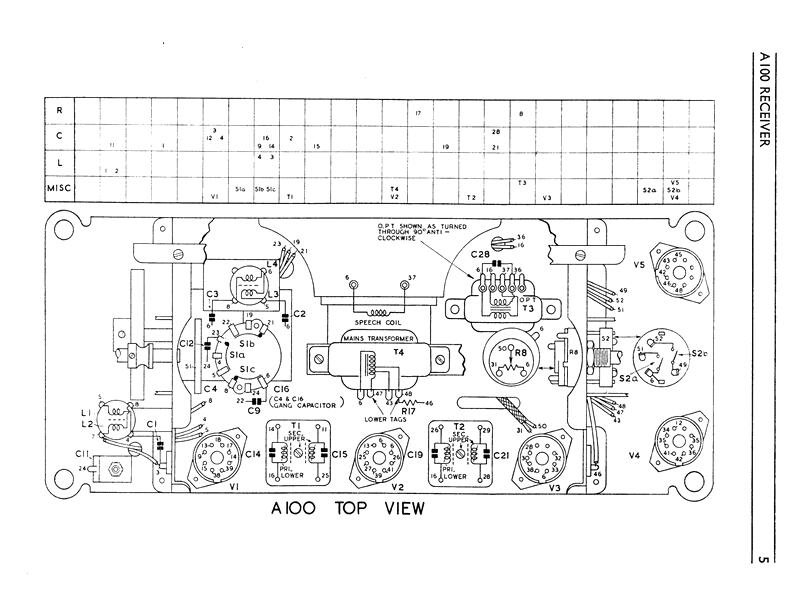
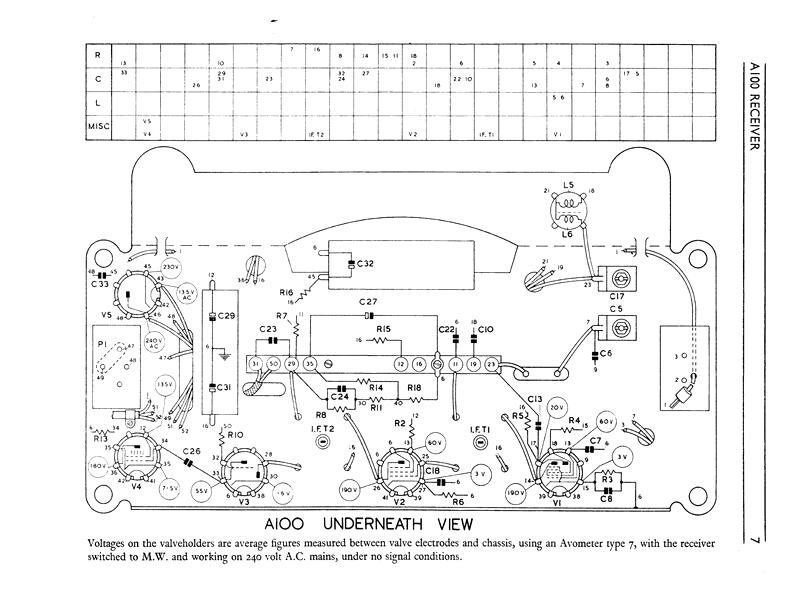
These pictures are faded on purpose, just for this preview. Members get the complete service manual, unfaded, to view and download.
The service manual includes:
- The full circuit diagram, with typical coil resistances
- Labelled top and underneath views of the chassis
- Mechanical details, including how to remove the chassis, valves, loudspeaker and scale
- How to fit a new cord drive
- Step by step trimming instructions
- Notes on production modifications
- The supplement for the A100F, with its frame aerial diagrams