Listening to the radio in the 1960s – how things changed
The 1960s were a great time for radio listening in Britain. It was a period when radio moved away from being something the whole family gathered around in the living room towards becoming a much more personal form of entertainment.
Compared with the 1930s, 1940s and 1950s, the changes were considerable. The technology improved, the programmes changed and, perhaps most importantly, people began listening in very different ways.
Radio before the 1960s – the family listening era
In the earlier days, particularly during the 1930s and 1940s, the wireless was often the centrepiece of the home.
- Radios were generally large, heavy valve-operated sets.
- They were usually mains-powered.
- Families gathered around one radio to listen together.
- Programmes included plays, comedy, variety shows, news and music.
- Reception was often limited to a few familiar stations.
- Listening was generally a planned activity rather than something people did all day while going about their business.
During the war, the radio became particularly important. The BBC was a vital source of news, information and reassurance. In the 1950s, radio remained popular, but television was beginning to take some of its audience.
The transistor radio revolution
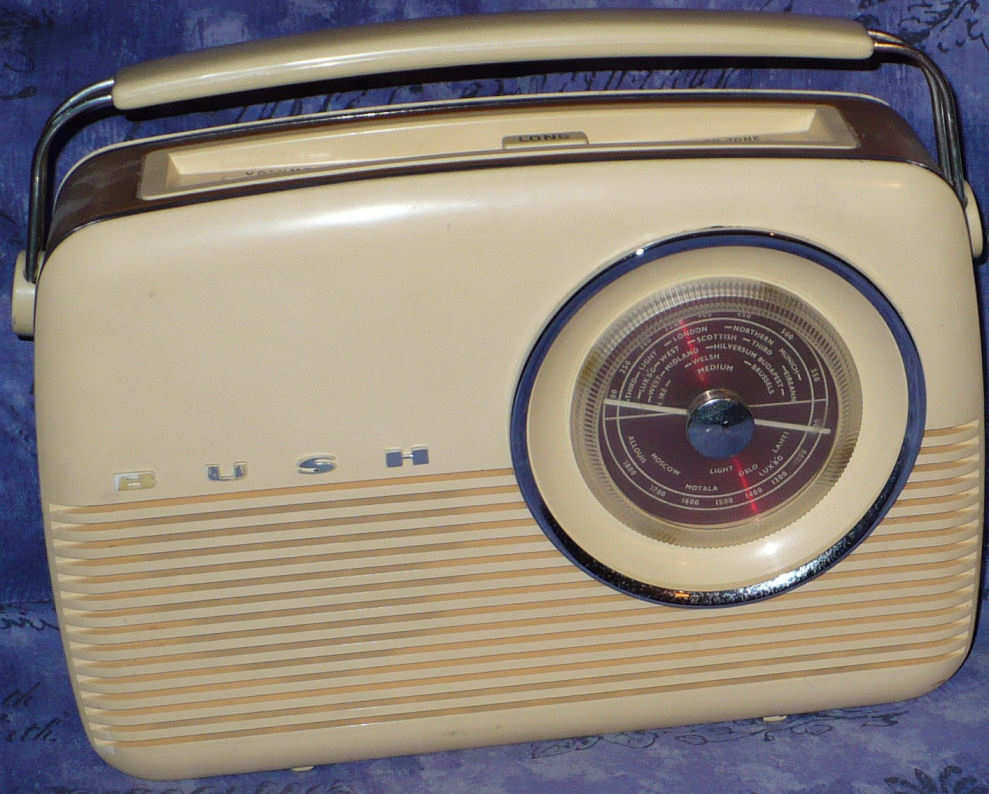
One of the biggest changes was the arrival of the affordable transistor radio. Although transistor radios appeared in the 1950s, it was during the 1960s that they really took off.
- You could listen in your bedroom.
- You could take the radio into the garden.
- You could listen while walking to school.
- You could take it to the beach.
- You could listen at work or while travelling.
The radio no longer belonged to the living room. Sets such as the Bush TR82 and Roberts portable radios became familiar sights. They were battery-powered, relatively compact and didn't need warming up like a valve radio. This was a tremendous change in everyday life.
The arrival of the pirate radio stations
Perhaps the biggest broadcasting revolution of the decade came in 1964. Before then, British radio was dominated by the BBC. There were three main domestic services:
| Station | What it offered |
|---|---|
| Home Service | News, talks, drama and general interest |
| Light Programme | Popular music and entertainment |
| Third Programme | Classical music, serious drama and culture |
There wasn't much choice if you wanted continuous pop music. Then came the offshore pirate stations.
Radio Caroline started broadcasting on 28 March 1964, followed by stations such as Radio London. For young listeners, it was a revelation.
They heard:
- The Beatles and the Rolling Stones.
- Motown and American soul.
- Rock and roll.
- Top 40 chart programmes.
- Exciting American-style disc jockeys.
- Commercial jingles and advertisements.
The presentation was very different from the rather formal BBC style. DJs sounded enthusiastic, informal and sometimes quite cheeky. They spoke directly to their listeners. For many young people, these stations represented freedom and a new way of life. Millions tuned in.
The pirate stations put enormous pressure on the BBC. In 1967, following legislation that effectively ended most offshore pirate broadcasting, the BBC reorganised its radio services.
On 30 September 1967:
- Radio 1 replaced the old pop music provision with a dedicated pop station.
- Radio 2 replaced the Light Programme.
- Radio 3 replaced the Third Programme.
- Radio 4 replaced the Home Service.
Tony Blackburn was the first DJ to broadcast on Radio 1. This was a major turning point in British broadcasting.
What about the actual listening experience?
There were some interesting differences between the equipment and reception of the earlier days and the 1960s.
| Earlier radio | 1960s radio |
|---|---|
| Large wooden cabinets | Small portable sets |
| Mainly valve technology | Increasingly transistorised |
| Mains electricity | Batteries or mains |
| Long and medium wave | Long, medium and VHF/FM |
| One radio shared by family | Several radios in a household |
| BBC-dominated listening | BBC and offshore stations |
| Formal presentation | More informal DJ presentation |
Another important development was VHF/FM broadcasting.
FM offered better sound quality and less interference than medium wave. Towards the end of the decade, stereo broadcasting also began to become more widely available.
Radio became part of everyday life
By the middle of the 1960s, radio was becoming much more mobile. Car radios were increasingly popular, and people listened while travelling. Small transistor sets became everyday companions. Radio was also increasingly used as background entertainment:
- Housewives listened while doing the housework.
- Workers listened in workshops and factories.
- Teenagers listened in their bedrooms.
- Drivers listened while travelling.
- People took portable radios on holiday.
A 1964 BBC yearbook estimated that nearly 30 million people listened to radio at some point each day. Radio was certainly not dead, despite the arrival of television.
What had been lost and what had been gained?
I think one of the most interesting things about this period is how dramatically the atmosphere of radio changed.
In the earlier days:
- Radio was an important household event.
- Families listened together.
- There was a certain formality about broadcasting.
- The announcers had distinctive, well-spoken voices.
- Programmes were often carefully planned and produced.
In the 1960s:
- Radio became much more personal.
- Young people had their own radios.
- Popular music became enormously important.
- DJs developed personalities and loyal audiences.
- Listening became something you could do almost anywhere.
There was also a certain excitement about searching the dial, particularly on medium wave, trying to find distant stations or pick up the offshore broadcasters.