
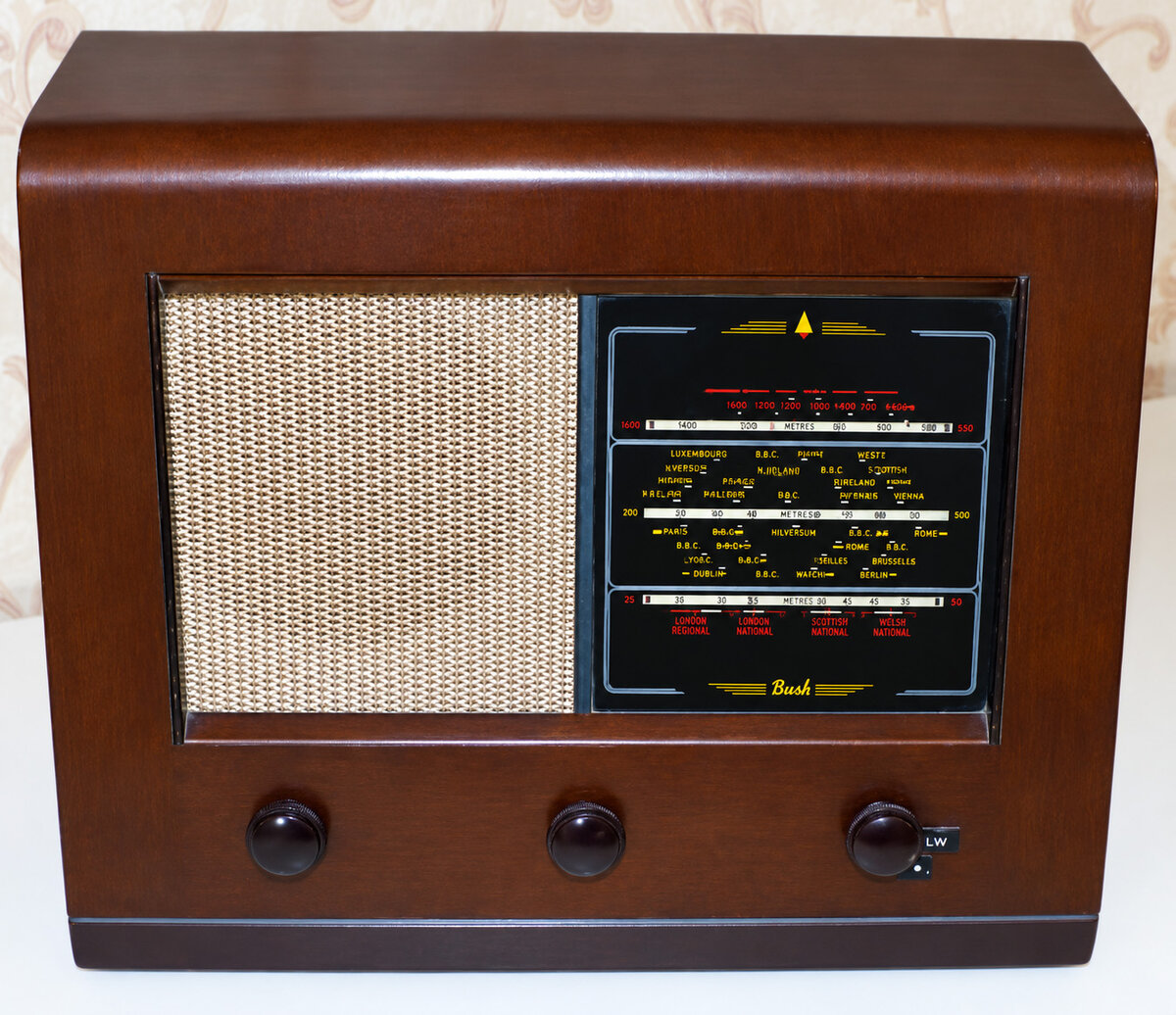
The Bush AC31 is a British valve radio introduced in 1952. It is a classic example of early 1950s domestic radio design, with a wooden cabinet, three wavebands and a four-valve superheterodyne circuit. The AC31 was designed when radio was still a major source of domestic entertainment in Britain, before television had become universal.
It has several appealing features:
- Three wavebands: The inclusion of short wave meant listeners could receive overseas broadcasters as well as domestic services.
- Traditional valve sound: Its EL41 output valve drives a relatively large loudspeaker, giving it the warm, rounded sound associated with vintage valve receivers.
- Good construction: Bush radios had a reputation for solid engineering. Contemporary collectors have described the AC31 as a good performer, particularly considering its straightforward four-valve design.
- Mains transformer: Unlike its related DAC31, the AC31 was designed specifically for AC mains operation, using a transformer and an EZ41 rectifier valve.
Valves
- ECH42 – frequency changer, combining mixer and local oscillator
- EBF80 – intermediate-frequency amplification, detection and automatic gain control
- EL41 – audio output amplifier driving the loudspeaker
- EZ41 – full-wave mains rectifier supplying the high-voltage circuits
SERVICE MANUAL PREVIEW
The original Bush service manual for the AC31 and DAC31 is available to members. Here's a taste of what's inside.
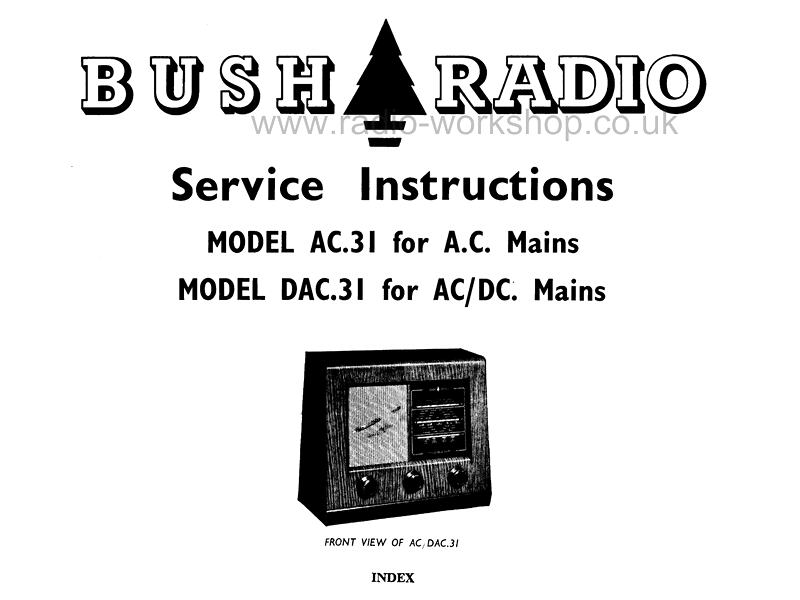
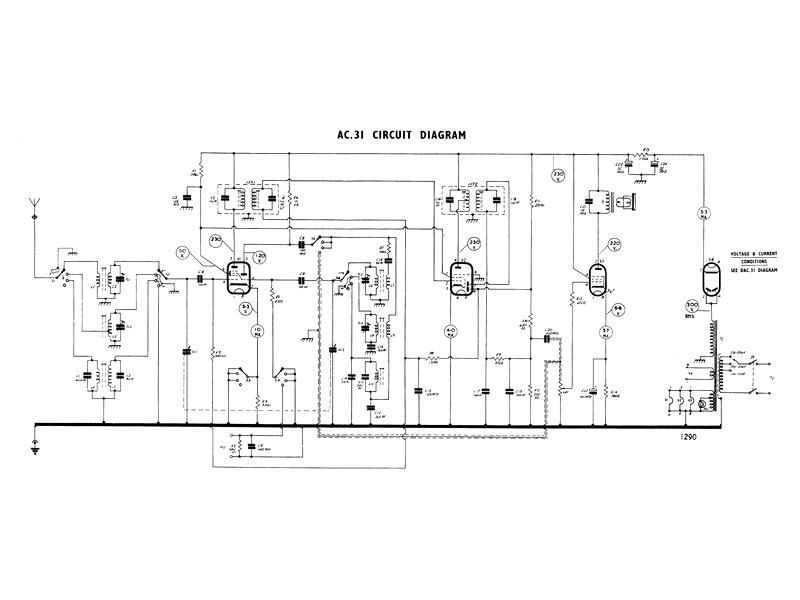
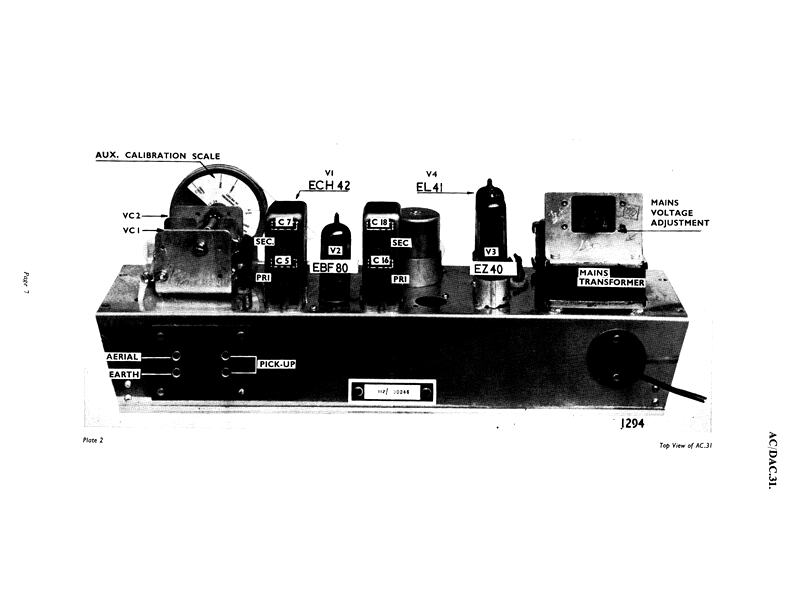
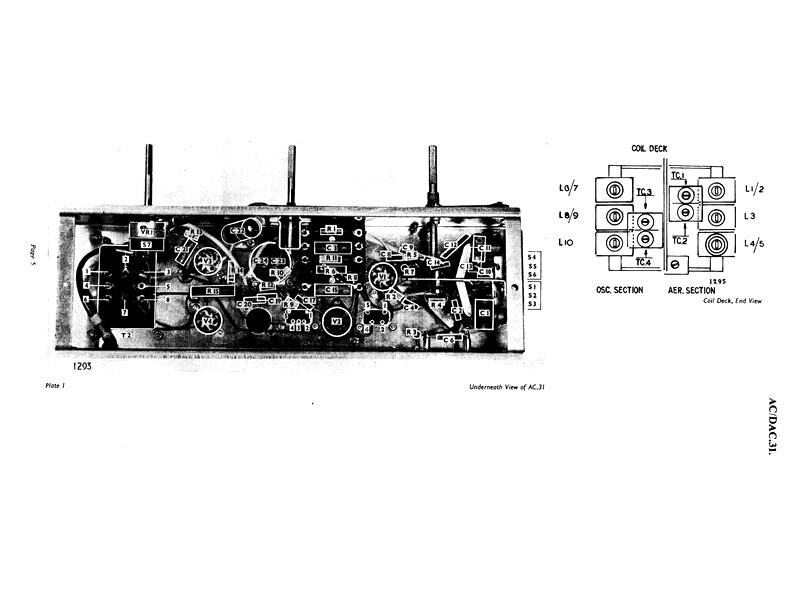
These pictures are faded on purpose, just for this preview. Members get the complete manual, unfaded, to view and download.
The manual includes:
- Circuit diagrams for both the AC31 and the DAC31
- Capacitor, resistor, coil and transformer values with Bush part numbers
- Step by step IF and RF alignment
- Valve voltages and currents for both models
- Coil deck connections and dismantling
- How to fit a new cord drive
- Labelled photos of the top and underneath of the chassis