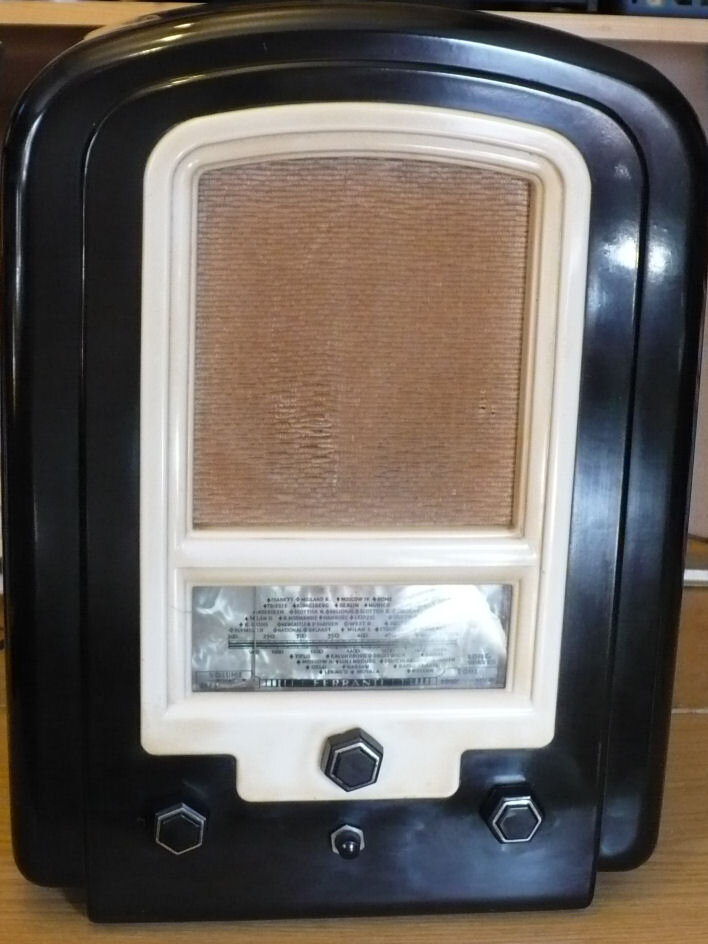
The Ferranti Nova is a distinctive British valve radio introduced in 1935 by Ferranti Ltd of Moston, Manchester. It is particularly interesting because of its striking Art Deco styling, innovative construction and place in the development of British radio receivers.
Unlike many 1930s radios, which were housed in conventional wooden cabinets, the Nova was produced in a moulded Bakelite cabinet. Its distinctive appearance has earned it the nickname the "Jelly Mould" radio.
There were several versions of the Nova, including two-waveband and all-wave receivers, and AC, AC/DC and battery-operated models.
The following specifications relate to the original 1935 AC Nova Consolette.
| Feature | Specification |
|---|---|
| Manufacturer | Ferranti Ltd, Moston, Manchester |
| Introduced | 1935 |
| Type | Four-valve superheterodyne |
| Valves | VHT4, VPT4, PT4D, R4 |
| Wavebands | Medium Wave and Long Wave |
| Intermediate frequency | 125 kHz |
| Power | 200–250V AC mains |
| Cabinet | Moulded Bakelite |
SERVICE MANUAL PREVIEW
The 1935 service sheet for the Ferranti Nova AC superhet is available to members, along with the sheets for the later and AC/DC and battery versions. Here's a taste of what's inside.
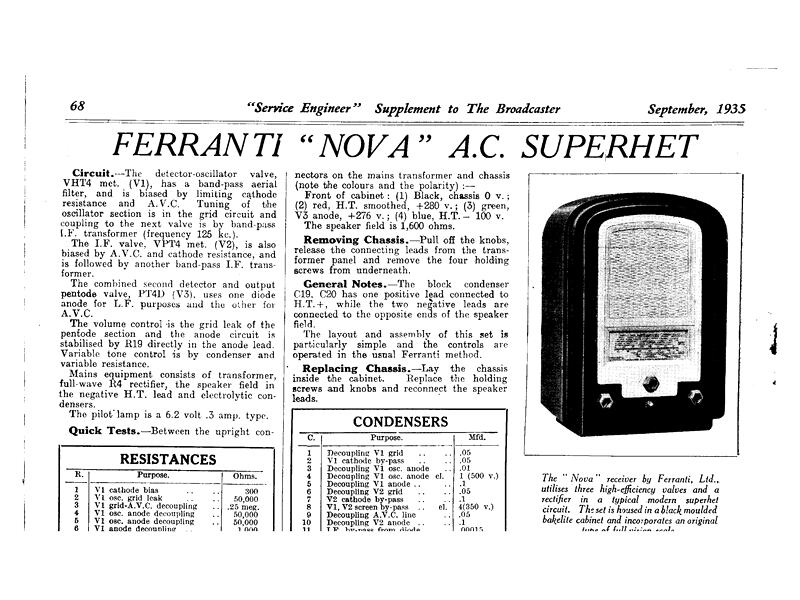
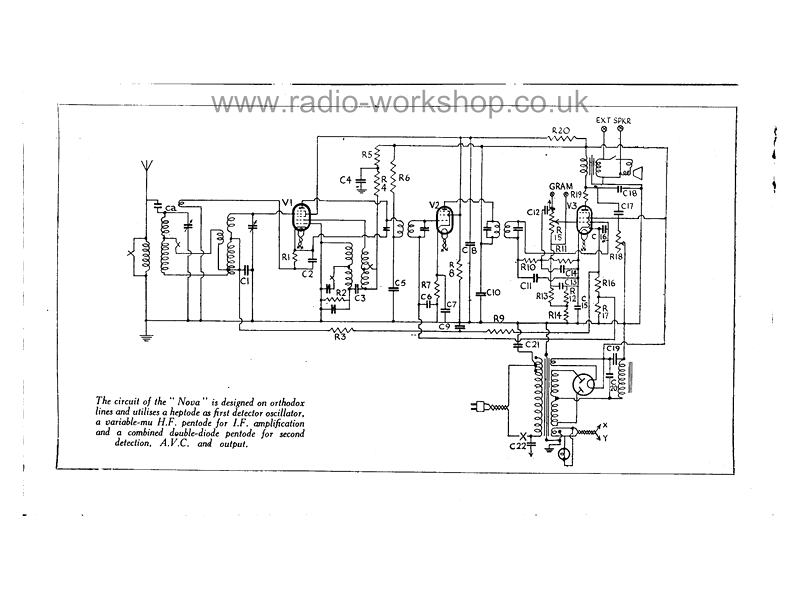
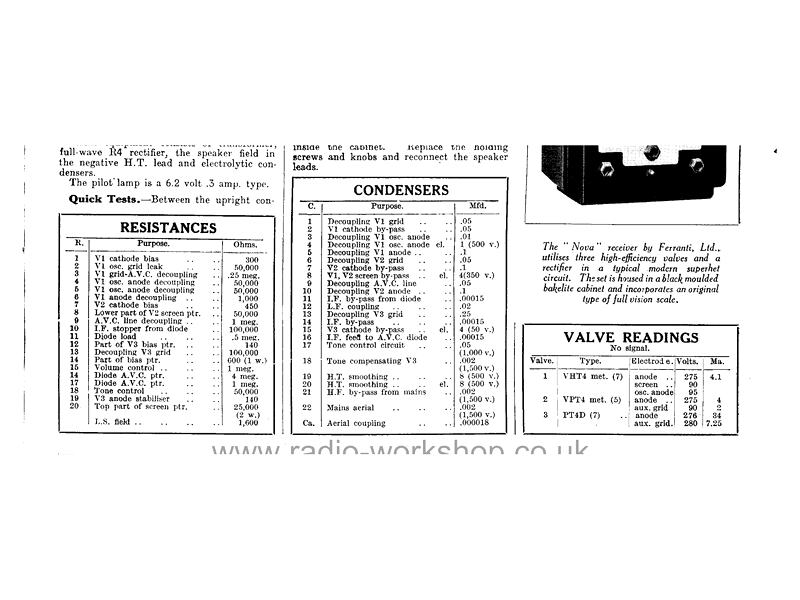
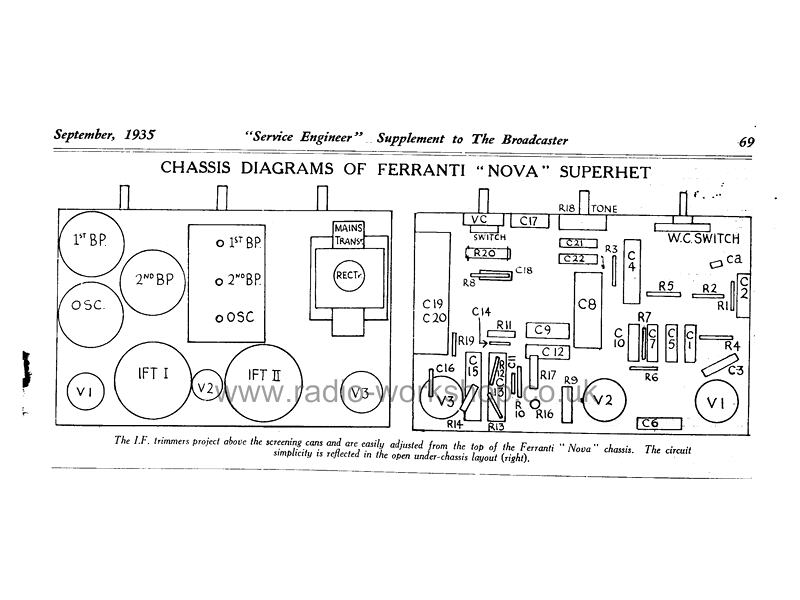
These pictures are faded on purpose, just for this preview. Members get the complete service sheet, unfaded, to view and download.
The service sheet includes:
- The full circuit diagram
- A description of the circuit
- Resistor and condenser values
- Valve readings
- Chassis diagrams showing where each part sits
- How to remove the chassis
- Quick tests for finding faults